Check out this iconic pintail pair by Ned Burgess (1868-1958) who was born in Duck, NC and later moved to the village of Waterlily in mainland Currituck County. From the age of 12, he was blind in his right eye as the result of an incident on the beach when a friend threw sand in his eyes. In addition to carving decoys, Ned made his living through various means including commercial fishing, trapping and carpentry. He is generally considered North Carolina’s most prolific carver and preferred using juniper sourced from his friend Moses White, for whom he made a stand of decoys in the late 1940’s. As he did throughout his 40-year career carving decoys, he used only hand tools including a hatchet, pocket knife and wood rasp.
This pair remain in original condition with expected wear, wood loss and shot scars from use. The hen has a section of wood loss on one side of her back and minor loss on the crown of her head. The simplistic paint patterns, typical of Burgess, looks to be very similar to those used at the Currituck Shooting Club and illustrated on pages 164 & 166 of “Gunnin’ Birds” by Kroghie Andresen. Don’t miss this opportunity to own an outstanding pair of North Carolina decoys. Both measure about 17” long.
Check out this iconic pintail pair by Ned Burgess (1868-1958) who was born in Duck, NC and later moved to the village of Waterlily in mainland Currituck County. From the age of 12, he was blind in his right eye as the result of an incident on the beach when a friend threw sand in his eyes. In addition to carving decoys, Ned made his living through various means including commercial fishing, trapping and carpentry. He is generally considered North Carolina’s most prolific carver and preferred using juniper sourced from his friend Moses White, for whom he made a stand of decoys in the late 1940’s. As he did throughout his 40-year career carving decoys, he used only hand tools including a hatchet, pocket knife and wood rasp.
This pair remain in original condition with expected wear, wood loss and shot scars from use. The hen has a section of wood loss on one side of her back and minor loss on the crown of her head. The simplistic paint patterns, typical of Burgess, looks to be very similar to those used at the Currituck Shooting Club and illustrated on pages 164 & 166 of “Gunnin’ Birds” by Kroghie Andresen. Don’t miss this opportunity to own an outstanding pair of North Carolina decoys. Both measure about 17” long.
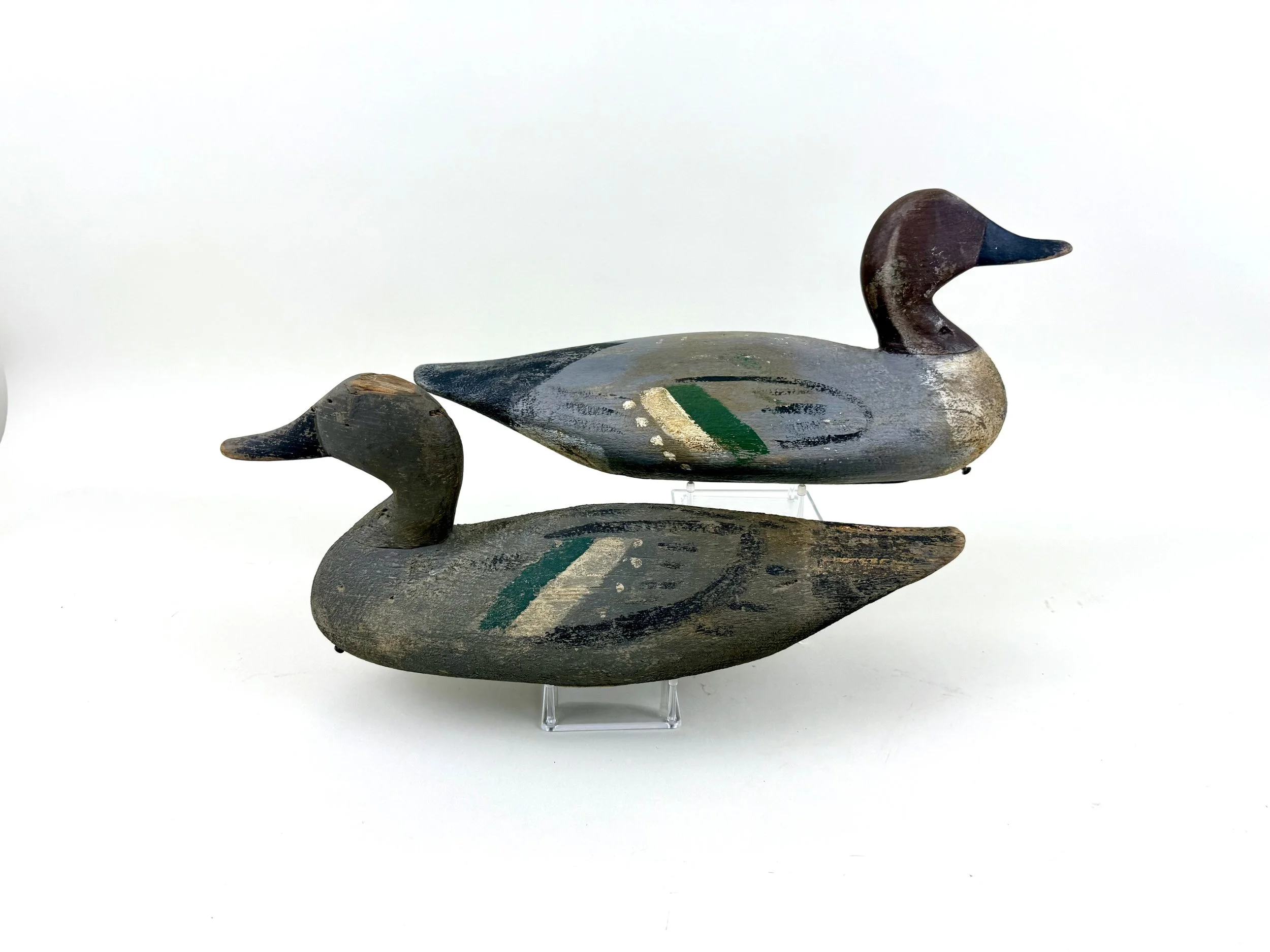 Image 1 of 9
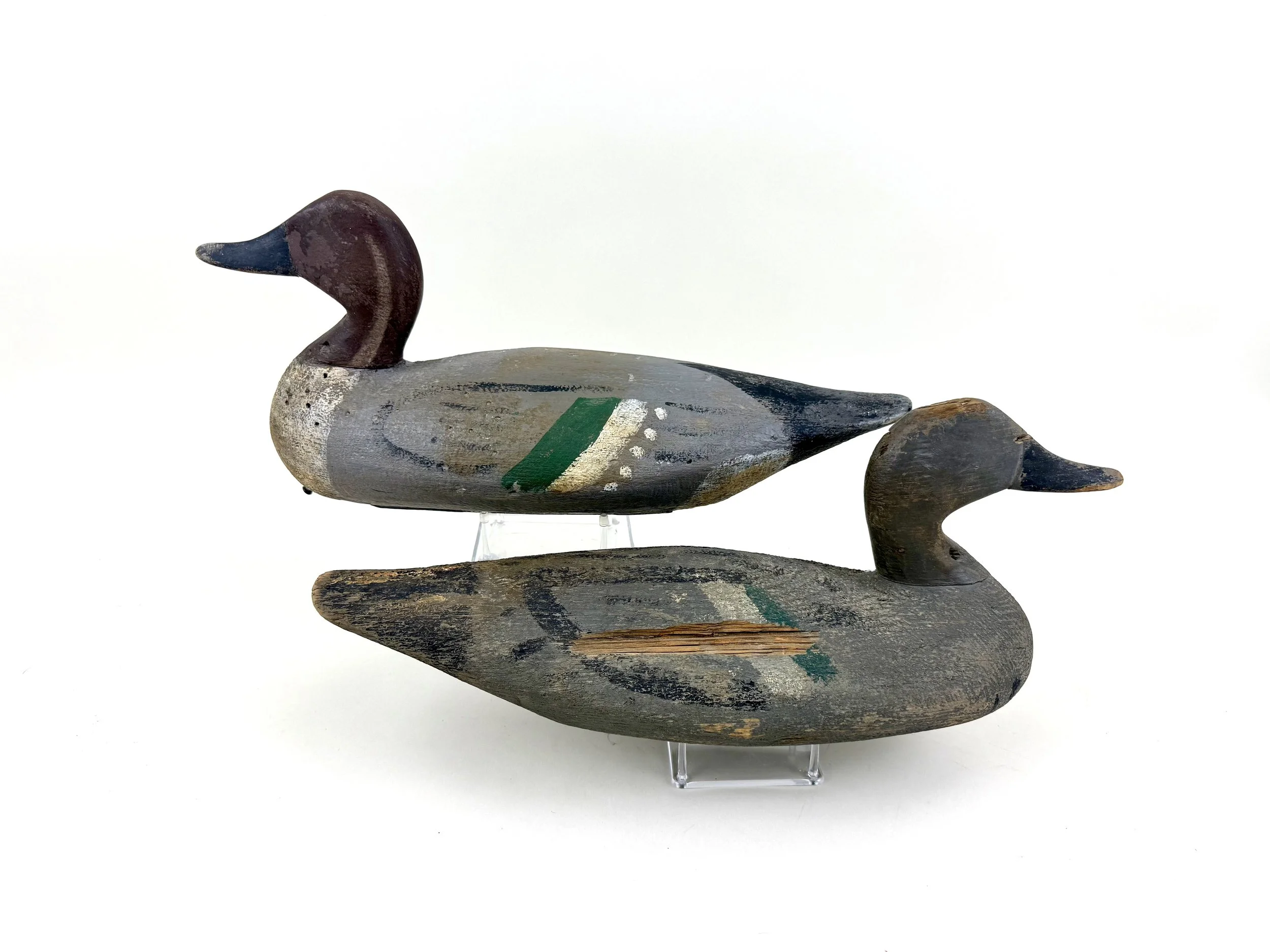 Image 2 of 9
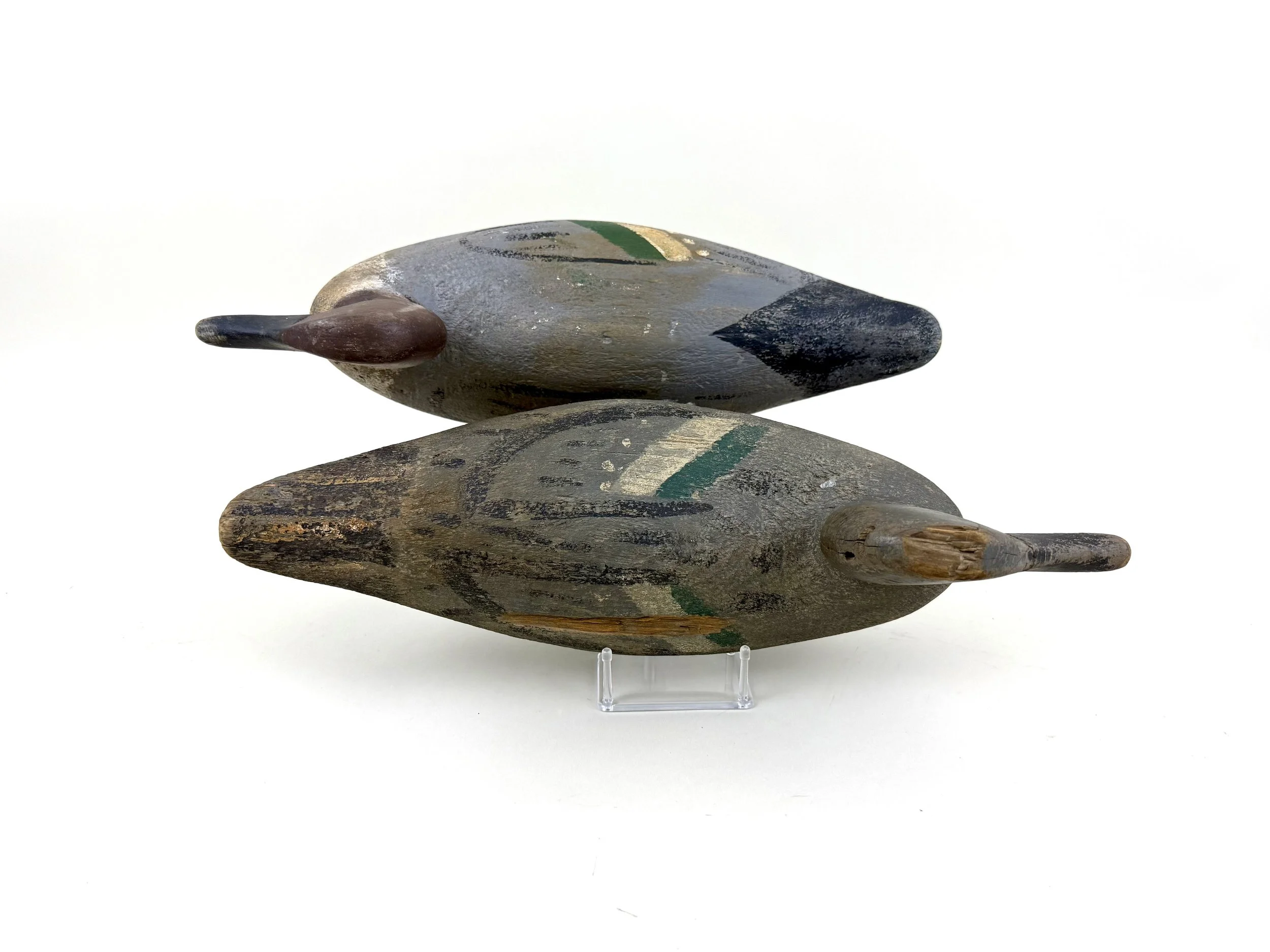 Image 3 of 9
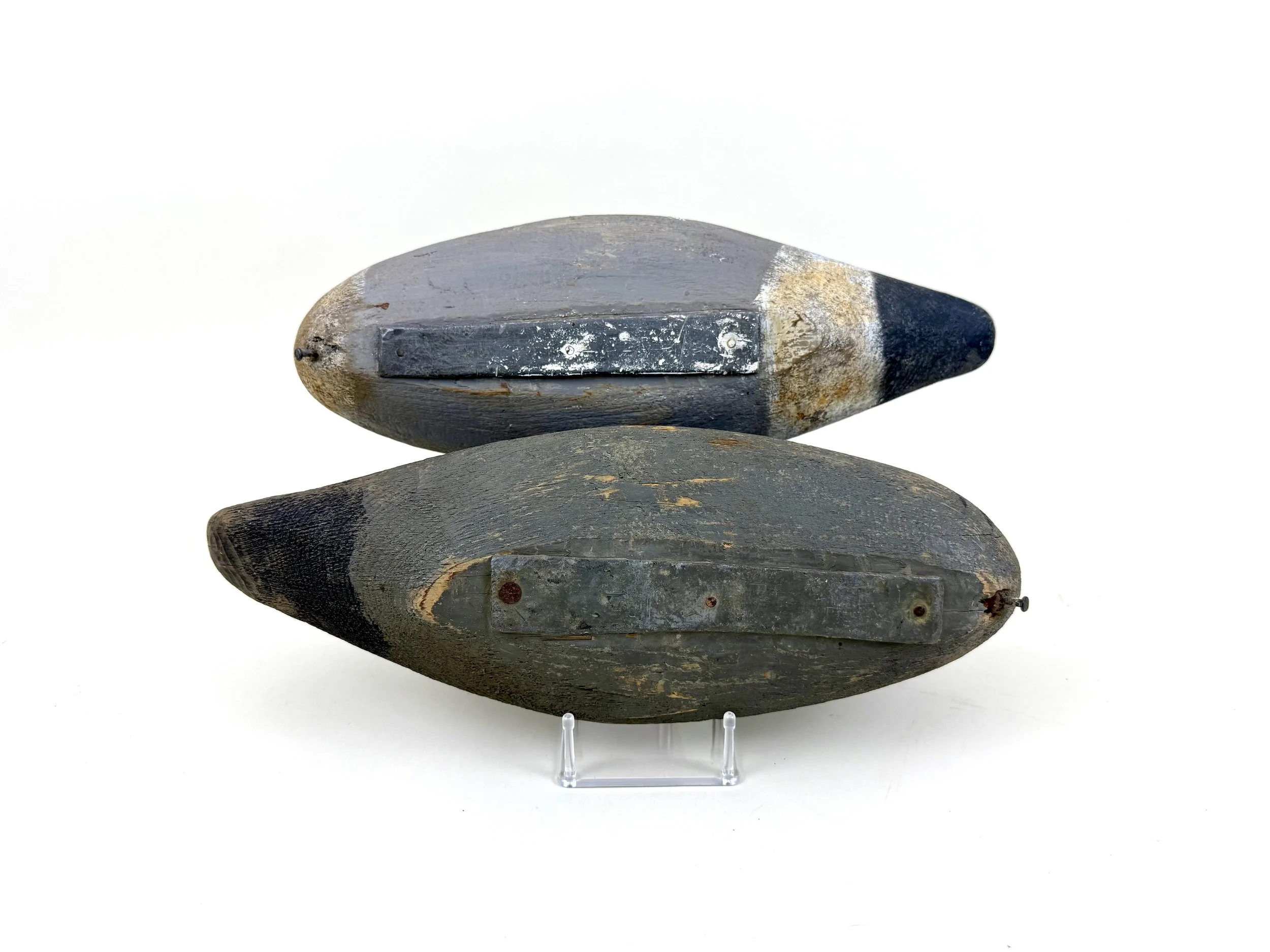 Image 4 of 9
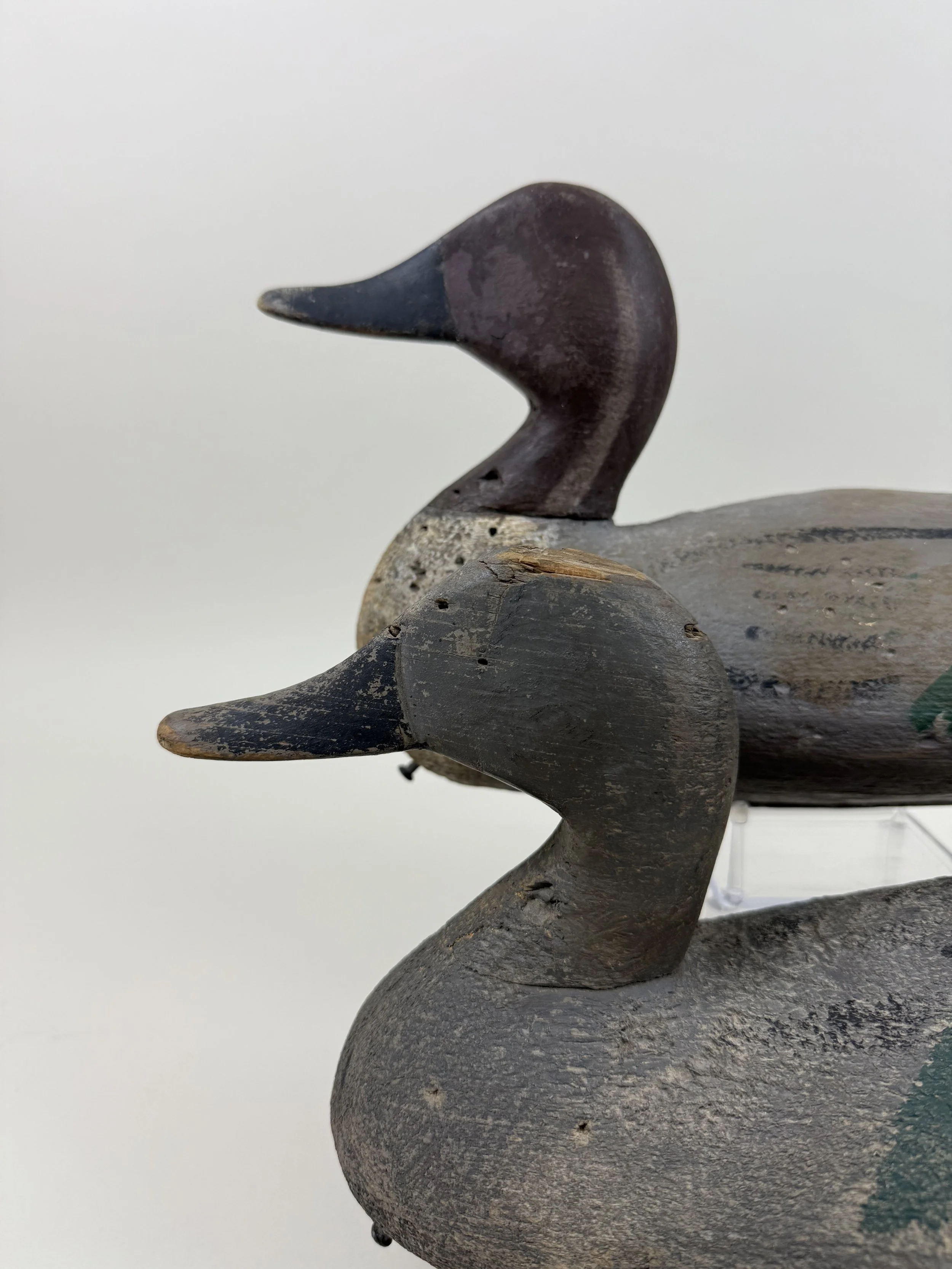 Image 6 of 9
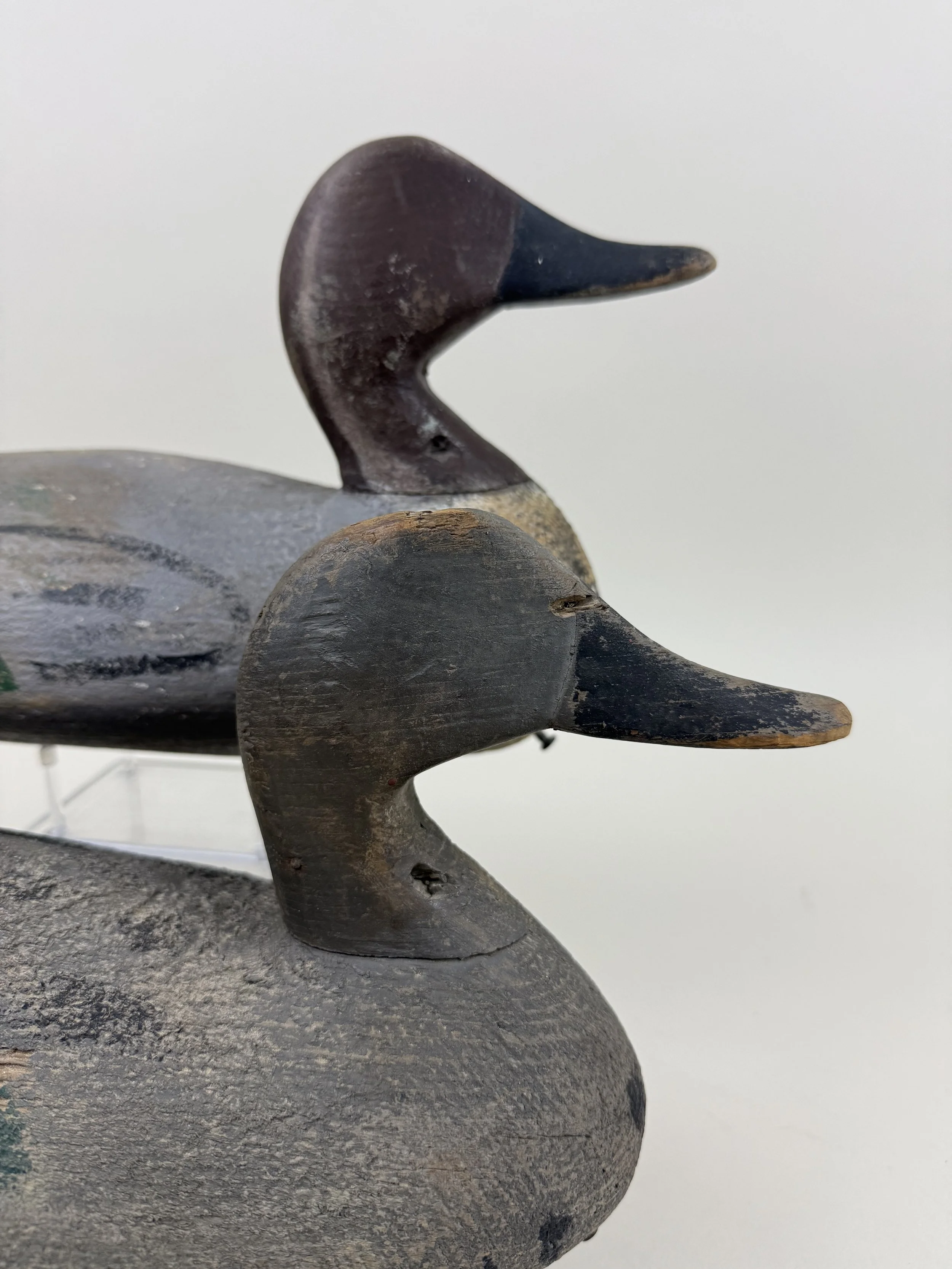 Image 7 of 9
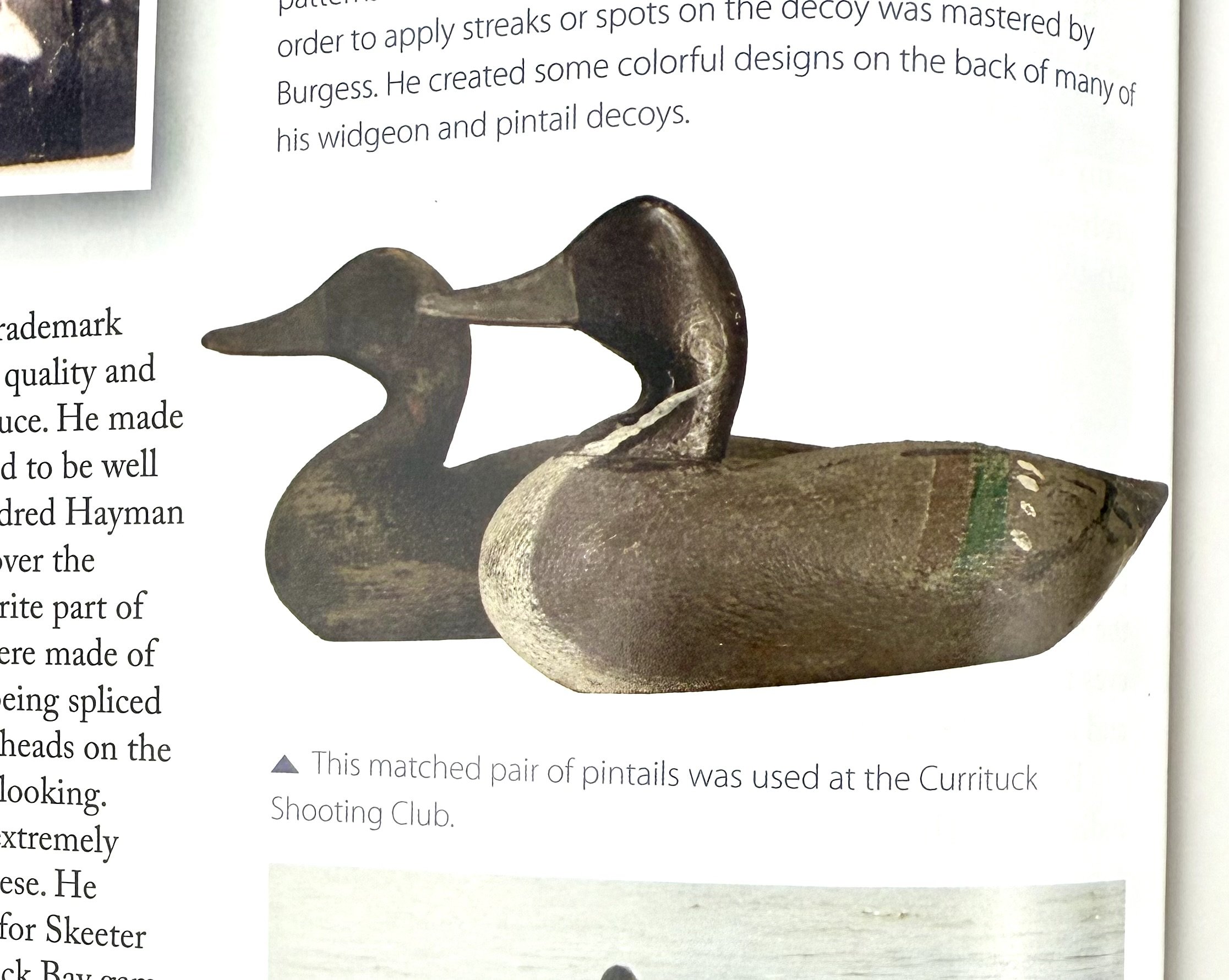 Image 8 of 9
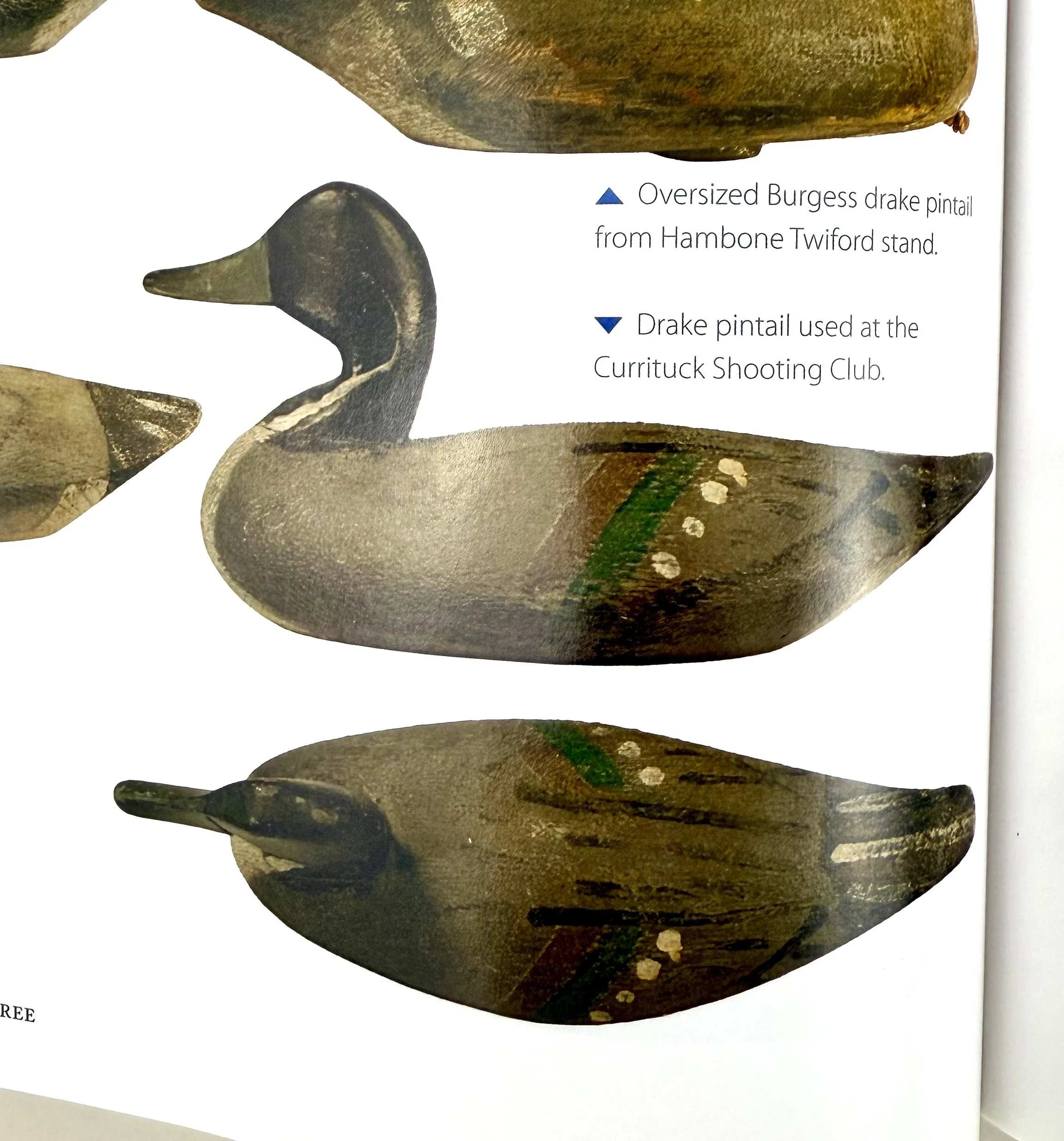 Image 9 of 9